Maid Stories · 5 min read
Where the Rain Stopped
A domestic worker and her employer’s neighbour discover that a monsoon romance needs more than shelter: it needs boundaries neither of them will cross.
18 July 2026 · All characters are adults aged 18+
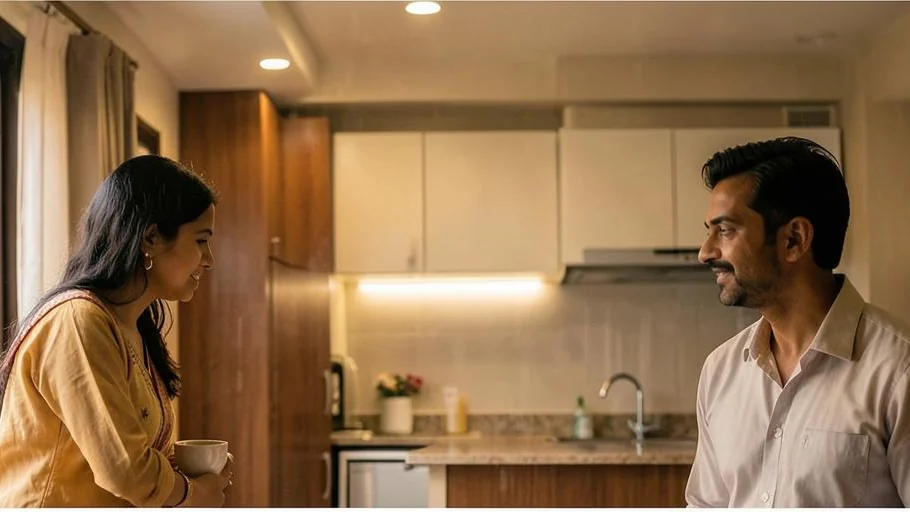
The balcony drain swallowed Meera’s silver anklet three minutes before the sea disappeared behind rain. At thirty-two, Meera Patil worked as a maid in three Mumbai apartments and distrusted expensive buildings with cheap plumbing. Across the narrow service shaft, thirty-five-year-old architect Rohan Desai looked up from rescuing his laundry when she said something unflattering about whoever had designed his home.
“Not me,” he called. “But I accept the professional embarrassment.”
She almost smiled. The anklet had belonged to her grandmother; its clasp had snapped while she moved Mrs D’Souza’s plants out of the wind. Meera crouched beside the drain, refusing to let either sentiment or rain interfere with her search. Rohan asked whether she wanted a torch. She said yes, but no advice.
He delivered the torch through Mrs D’Souza’s front door, announced himself, and remained in the sitting room while Meera worked. With a bent hairpin and considerable swearing, she retrieved the anklet. When she returned his torch, he admired the operation rather than praising her patience, which she had conspicuously lacked.
Their next conversation happened downstairs, beneath the building’s leaking entrance canopy. Meera was waiting for the rain to ease before walking to the bus stop. Rohan offered his umbrella. She declined: borrowed umbrellas became obligations, and she already had enough of those. Instead, he moved his bag so she could stand beneath the driest portion of the roof.
“You notice drains,” she said. “Can you notice that one?”
Water was backing up beside the entrance ramp. He photographed it and emailed the housing society. When the secretary thanked him the following afternoon, Rohan said the report should name Meera, who had identified the blockage. She heard about this from the watchman, along with the secretary’s irritation at having to amend his message.
For several weeks, their acquaintance occupied small public spaces: the lift lobby, the vegetable stall, the bakery where Meera bought yesterday’s bread because she preferred it toasted. Rohan learned that she was studying bookkeeping on Sundays. She learned that he designed clinics, hated coriander stems, and had once killed a cactus through excessive concern.
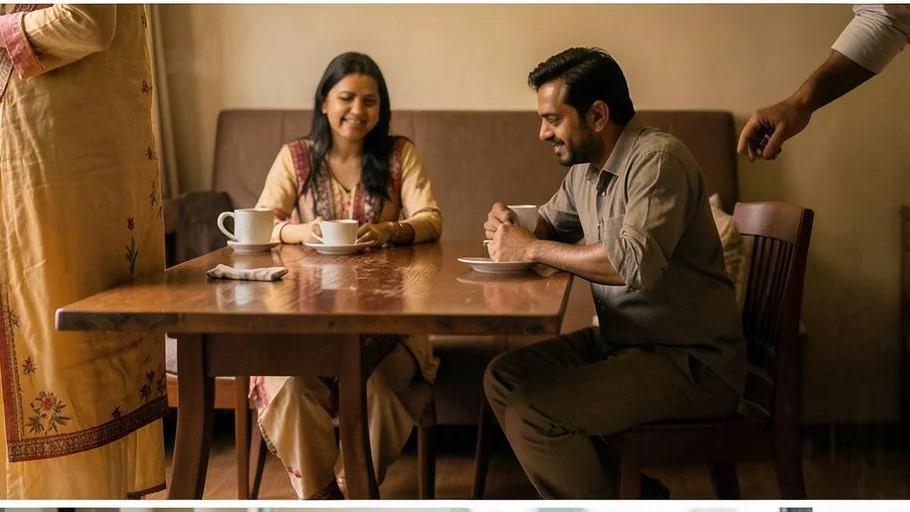
One evening, he found her on Mrs D’Souza’s balcony, watching lightning beyond the neighbouring towers. The apartment door stood open behind them. Her work was finished; she was waiting for the older woman to return her signed payment record. Rohan remained by the doorway and asked whether she would have coffee with him sometime.
Meera looked at him for long enough to make him lower his eyes.
“Not here,” she said. “And not as somebody who can discuss me with my employers.”
“I don’t employ you.”
“You live beside someone who does. That isn’t the same thing as having no influence.”
He nodded, slowly this time. “You’re right. I hadn’t thought far enough.”
She gave him no answer about coffee. For the next fortnight, he greeted her exactly as before: neither wounded nor conspicuously polite. He did not recruit Mrs D’Souza to praise him. When the society circulated a proposal requiring domestic workers to use only the service lift, he objected at the residents’ meeting without mentioning Meera or their conversation.
She heard about that too. This time, she asked him directly what he had said. He showed her the meeting minutes rather than supplying a heroic account. His objection concerned access, safety, and the existing rules. Three residents had supported him; four had objected. The proposal remained under discussion. Meera appreciated the unfinished, unglamorous truth.

On the first Sunday of August, she sent him a message. She had obtained his number from him specifically for this purpose, not from the building directory. “Coffee. Matunga. Four o’clock. I’m paying for mine.”
He arrived early and was already drinking water when she entered. Outside her work clothes, in a rust-coloured kurta and the repaired anklet, she felt unexpectedly exposed. Rohan stood, then sat when she waved him down. They talked about his unhappy divorce, her decision not to marry the man her uncle had recommended, and the particular loneliness of being considered practical.
Their disagreement arrived with the second coffee. Rohan suggested an expensive bookkeeping programme he knew through a client. Meera’s shoulders tightened. She had researched it; its placement claims were inflated, and its evening schedule would cost her two reliable households. He listened, apologised for assuming information was the same as useful help, and asked about the course she had actually chosen.
By September, they had developed rules without making a ceremony of them. No personal visits during her shifts. No conversations about her wages with her employers. If gossip affected her work, they would address what she wanted addressed, not what offended his pride. Their dates belonged to the city beyond that apartment building: a museum, a crowded dosa place, the promenade after rain.
The gossip came anyway. A resident asked Meera whether she was planning to stop working now that she had “found an architect”. Meera replied that architects also needed salaries. Later, anger made her hands shake around her tea. Rohan asked whether she wanted him to intervene. “Not with her,” she said. “Just don’t ask me to find it funny.”
He didn’t. They sat until her tea cooled, his hand resting open on the table. She placed hers over it.
In October, on his balcony, they watched the season’s last serious storm. She had come as his invited guest, on her day off, carrying dinner they had agreed to share. He asked if he could kiss her. “Yes,” she said, drawing him closer. Afterwards, she tested the repaired anklet with her thumb. Below them, rain ran cleanly through the cleared drain, and inside, their dinner was getting cold.