Maid Stories · 5 min read
A Window Facing Morning
At a Himachal homestay, a domestic worker and a travel photographer learn that being seen clearly requires patience on both sides.
15 March 2026 · All characters are adults aged 18+
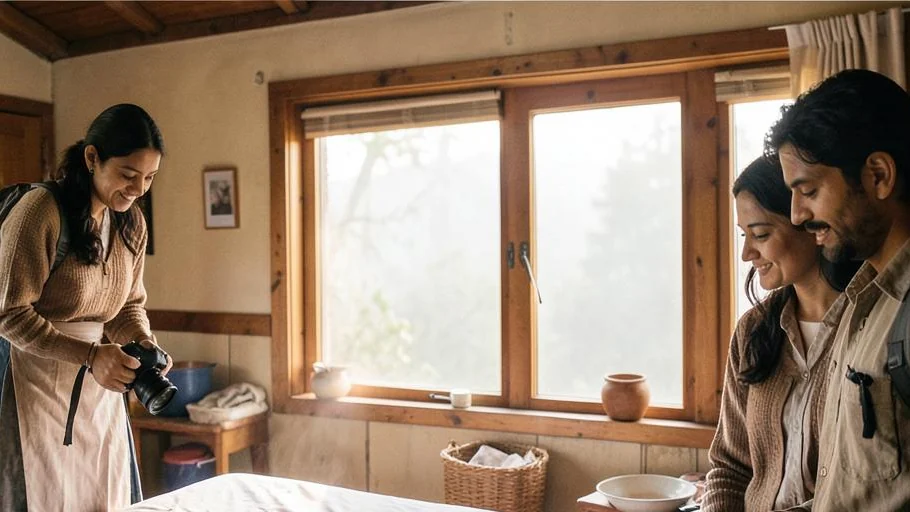
Tara Thakur knew the guest had photographed her before she heard the shutter. At thirty-one, she worked as a maid and room attendant at a small Himachal homestay, where cedar windows framed the valley better than any camera. Thirty-six-year-old travel photographer Dev Malhotra lowered his lens at once.
“I’m sorry,” he said. “The light—”
“Belongs to everyone,” Tara finished. “My face does not.”
He deleted the image while she watched. It showed only for a second: Tara shaking a white sheet beside the morning window, sunlight across her hands. Beautiful, perhaps. Stolen, certainly.
For two days, Dev spoke to her only about towels and breakfast times. On the third, he left his camera zipped inside its bag while she lit the dining-room stove. He asked whether guests often photographed staff without permission.
“Often enough that people think deleting one picture deserves a medal.”
He winced. “Understood.”
That afternoon, the homestay owner asked Tara to guide Dev to a viewpoint because the regular guide was ill. Tara declined. Guiding was not part of her domestic work, and she did not want a day alone with him. The owner accepted her answer. Dev hired a local guide and returned with photographs of mist, monkeys, and his own wet shoes.
Their real acquaintance began over a broken window latch. Tara was holding the frame steady while the carpenter searched for screws. Dev passed through, noticed the glass trembling in the wind, and asked if another pair of hands would help. She said yes. He put down his camera before touching the frame.
Afterwards, they shared soup in the kitchen because the dining room was too cold. Dev told her he had begun photography at twenty after failing an engineering entrance exam. Tara told him she had wanted to train in hotel management, but her mother’s illness had made full-time study impossible. She did not present this as tragedy. She was taking online classes one module at a time.
“May I ask what you’re studying now?” he said.
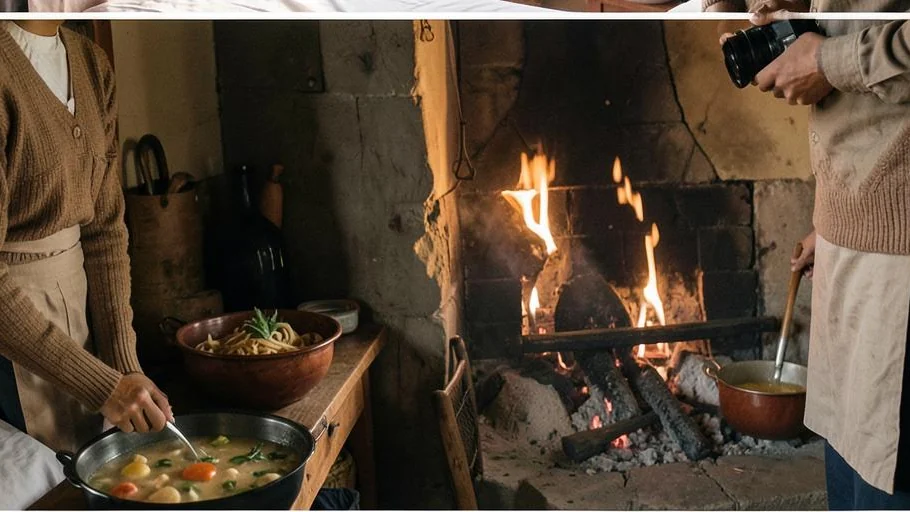
“Guest relations.”
He looked around the quiet kitchen. “I suspect you could teach it.”
“First lesson: do not photograph the teacher without asking.”
He laughed, and she did too.
During his two-week stay, their conversations remained in common spaces. Dev showed Tara landscapes on his camera only when she requested them. She criticised his captions for making every village sound untouched by time. People here used smartphones, argued about road budgets, and worried about school fees, she told him. Mist did not make them mythical.
He rewrote three captions before posting. He credited the local guide who had identified the locations. Tara noticed because she checked, though she did not tell him.
On his final evening, snow threatened the road. The owner suggested Dev stay another week and offered Tara extra hours. Dev asked her privately whether his presence would make those hours uncomfortable. The question surprised her. She said no; he had learned how to be a guest.
The snow arrived overnight, closing the pass. With only two occupied rooms, the homestay became quieter. Dev helped carry firewood after arranging payment for the task with the owner; Tara teased him for being slow. He said photographers preserved their backs. She said domestic workers apparently kept spare ones.
At the kitchen hearth, attraction warmed into something neither could ignore. Once, reaching for the same ladle, their fingers met. Dev held still. Tara withdrew first, then, a moment later, placed her hand lightly over his. The choice made his breath catch.
But when he asked if she would meet him after her shift, Tara refused. “You are still a guest. If this becomes awkward, I must keep coming to work.”
He accepted it. On checkout morning, he gave the owner his completed feedback, settled every bill, and asked Tara whether he could leave his number. She said he could write it in the guest register’s message section, where she could choose whether to copy it.
He left after the road opened. For three weeks, Tara did not call. She completed her module, helped her mother through a difficult appointment, and considered whether the feeling belonged to Dev or to the unusual experience of being listened to. Then the homestay received a parcel addressed to the owner, containing prints of the valley photographs for promotional use under a written licence. There were no images of staff. One cedar-window photograph carried a caption about a working hill town waking for another ordinary day.
Tara copied his number.
Their first date happened in Shimla, halfway between his assignment and her home. She wore a green coat and arrived twenty minutes early; he came without his camera. They talked until the café stacked chairs around them. He confessed that he had nearly brought flowers but worried they might feel like an apology that expected forgiveness.
“You already apologised,” she said. “This is not payment.”
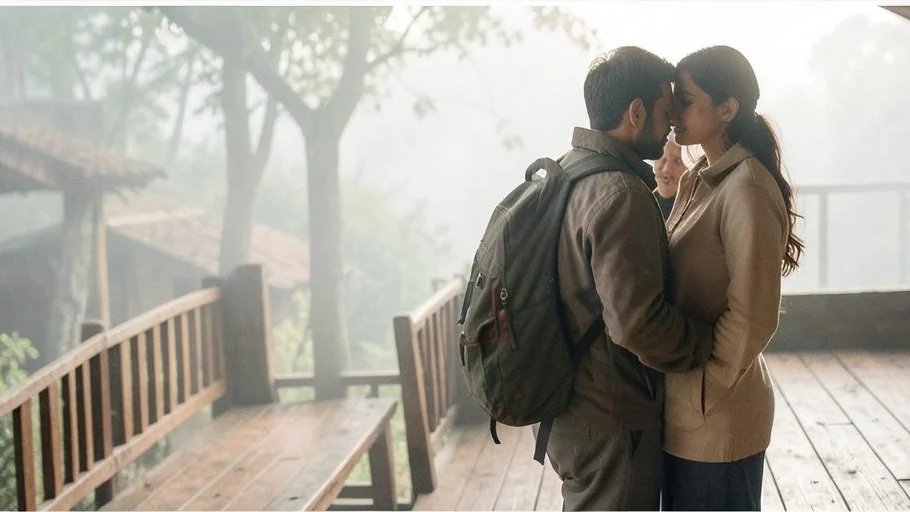
Outside, evening mist softened the lamps. Dev asked before taking her hand. Later, beneath the awning of a closed bookshop, he asked before kissing her. Tara said yes both times. The kiss was warm and unhurried, tasting faintly of cardamom tea.
Months later, after Tara completed her certificate, she accepted a front-desk role at a larger property on her own merit. Dev visited between assignments, booking elsewhere so her workplace never became their private space. One morning, they returned as ordinary visitors to the original homestay. Tara stood beside the cedar window and asked him to take her photograph.
He lifted the camera, then paused. “Are you sure?”
“Yes.” She faced the light on her own terms. “Now I am.”