Maid Stories · 5 min read
The Margin in Blue
A maid studying for her degree and a schoolteacher’s brother connect through poems, but neither will let employment blur the terms of affection.
9 April 2026 · All characters are adults aged 18+
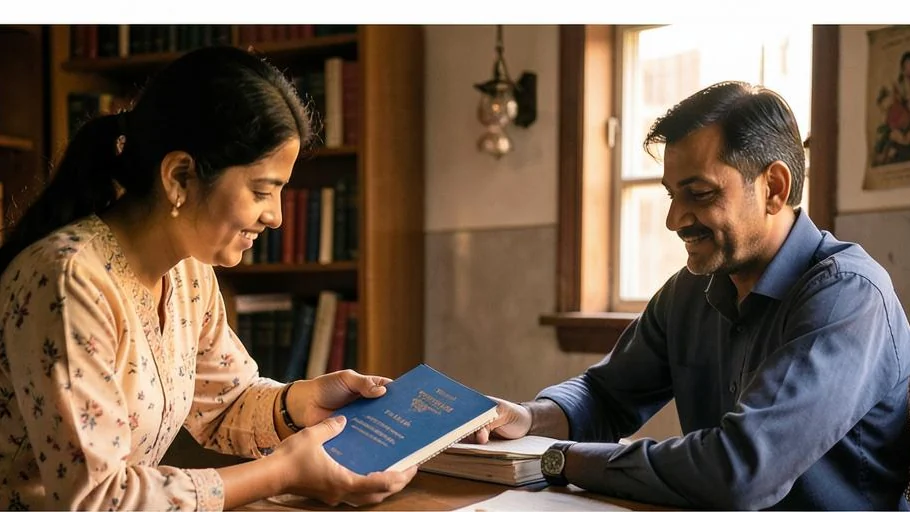
The sentence in the margin was more honest than the poem. Shalini Verma, twenty-eight, read it while dusting the study of a retired Lucknow schoolteacher: “This sounds beautiful and means almost nothing.” She laughed aloud. From the doorway, thirty-three-year-old Hindi teacher Aman Verma said, “My sister wrote that about my first published poem.”
Shalini worked as a maid in Dr Meena Verma’s household four mornings a week while completing a distance-learning literature degree. Aman, Meena’s younger brother, had moved into the spare room during school renovations. He taught at a secondary school across town and possessed the alarming habit of leaving books open face-down.
“You’ll break their spines,” Shalini told him.
“You sound like my sister.”
“Your sister pays me to protect this room from both dust and relatives.”
He grinned, but closed the book properly. The next day, a blue notebook lay on the desk with a note asking whether she wanted to read the rest of the poem. Shalini left it untouched. At lunch, she told Meena that personal material should not be placed in her work area. Meena listened, then asked Aman to keep his writing in his room unless Shalini specifically requested otherwise.
He apologised that evening. “I assumed shared interest meant permission.”
“It means we both like poems,” Shalini said. “Nothing more until somebody asks.”
So he asked. Not for a date, but whether she would like to exchange one poem each Friday after her shift, in the front verandah where Meena often took tea. Shalini agreed because the arrangement was clear and because his second poem was considerably better than his first.
Their weekly reading became the brightest hour of her crowded schedule. Shalini chose poets who wrote about work without turning labour into noble suffering. Aman chose love poems that made her accuse him of strategic selection. He claimed innocence with such poor acting that Meena snorted into her tea.
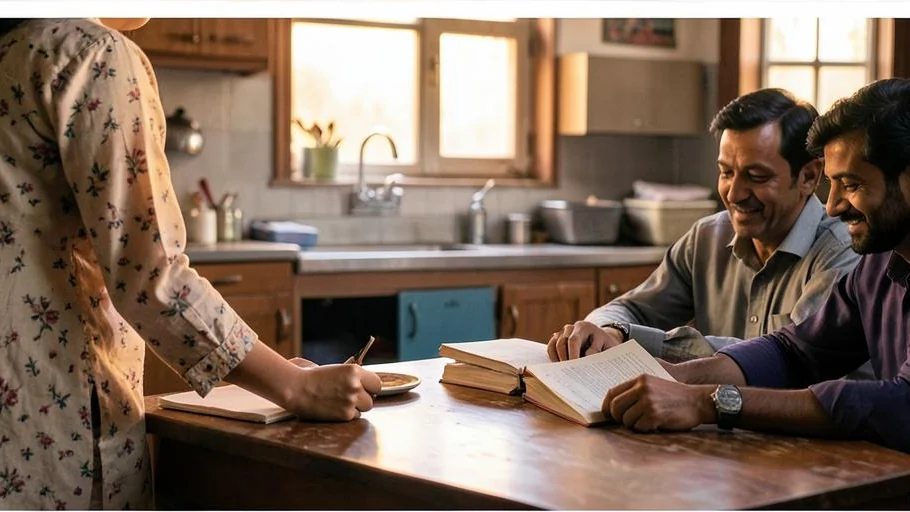
The attraction between them arrived before either acknowledged it. Shalini noticed his forearms when he rolled up his sleeves to repair a shelf. Aman forgot a line he had taught for twelve years when she leaned over the notebook beside him. They kept the notebook on the verandah table and the distance between their chairs deliberate.
Then Shalini’s examination fee increased. Meena offered an advance, documented in the wage register as Shalini requested. Aman overheard only the first part of the conversation and, later, slipped money into the blue notebook. Shalini found it that Friday.
She returned the notes immediately. “You cannot court me and lend me money without asking. I won’t wonder whether saying no to you means owing you.”
His face changed as he understood. “I wanted to help.”
“I know. That doesn’t make the method harmless.”
He apologised, but she cancelled their Friday readings for a month. Meena did not interfere except to assure Shalini that her employment and advance were unaffected. Aman moved his books out of the study and made himself scarce during her shifts.
The absence hurt more than Shalini expected. She missed arguing about metaphors. She also knew that missing him was not a reason to abandon a boundary. At the end of the month, after her exam, she found him at a public library lecture she had mentioned weeks earlier. He had bought his own ticket and sat three rows away.
Afterwards, he approached only when she waved. “How was the exam?” he asked.
“Difficult. Fair.”
“I’m glad.”
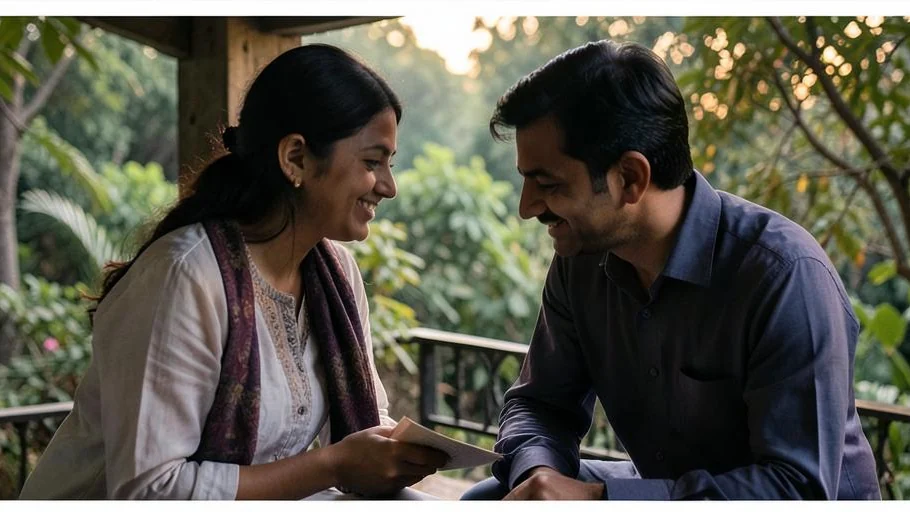
They walked to the tea stall outside. Aman said he had taken her objection to a counsellor at his school, not to seek absolution but to understand why good intentions could still create pressure. He would not offer money, professional introductions, or academic help unless she requested something specific. If they dated, it would happen outside Meena’s home and outside Shalini’s paid hours.
Shalini heard the carefulness in his voice and the fear beneath it. She liked that he was not asking her to comfort him for having learned something.
“One coffee,” she said. “Sunday. Public place.”
Their relationship grew around buses, libraries, crowded parks, and the disciplined privacy of two people whose families noticed everything. Shalini completed her semester. Aman stopped sending her his drafts unless she requested them. She did request them, eventually, and covered the pages in blue ink.
Meena raised Shalini’s wages at the annual review based on expanded duties documented months before Aman arrived. She showed Shalini the calculation so nobody could mistake it for family favour. Shalini accepted. Transparency, she was learning, could be a form of tenderness too.
On the night her results arrived, Aman met her outside the university office. She had passed with distinction. They celebrated with kulfi beneath strings of market lights, his shoulder brushing hers whenever the crowd pressed close. At the quieter end of the lane, he asked if he might kiss her.
“Yes,” she said, “but if you quote poetry first, I’m leaving.”
He kissed her without a word. It was soft, then lingering, her hand warm at his collar. When they parted, he gave her the blue notebook. Every page was blank except the first. In his neat handwriting, one sentence waited: “Tell me what this should mean.”
Shalini uncapped her pen and wrote in the margin: “We decide together.”