Maid Stories · 5 min read
The Lamp Left On
At a Bengaluru office guesthouse, an observant domestic worker and a visiting researcher postpone attraction until hospitality can become a genuine choice.
22 June 2026 · All characters are adults aged 18+
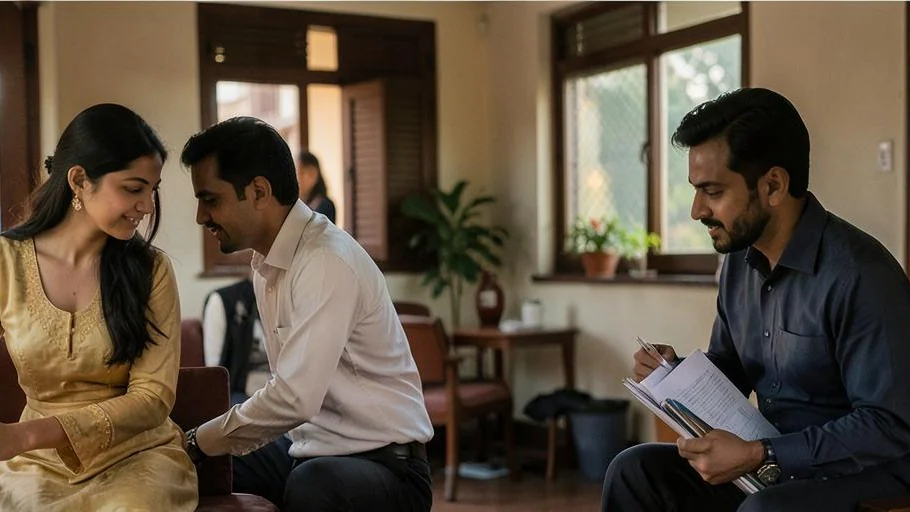
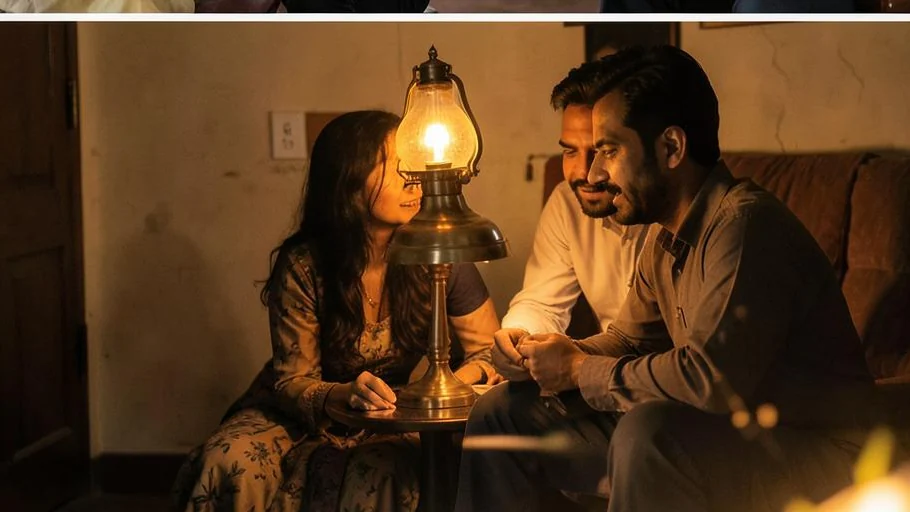
At eleven seventeen, the guesthouse lamp blinked twice and exposed Nikhil’s lie. He had claimed he was going straight to bed; instead, the thirty-four-year-old water researcher was sitting beneath it, dismantling a presentation. Kavya Rao, twenty-nine, worked as a domestic worker in the Bengaluru office guesthouse. She had returned for her forgotten helmet, not to rescue another guest from his deadline.
“The lamp switches off at midnight,” she said. “Unlike you, it has boundaries.”
Nikhil looked up, startled, then laughed. He had been staying there for a week while his research team worked with the engineering firm next door. Kavya handled cleaning and breakfast service through a workers’ cooperative. Her shift had ended at eight. He closed his laptop before asking whether she knew the nearest late-night café.
She pointed him towards one on the main road. When he asked if she wanted anything, she tapped her helmet. “I want to get home before my sister eats the last dosa.”
The following morning, he washed his breakfast plate despite the sign requesting that guests leave dishes in the tray. Kavya stopped him before he could put a wet steel tumbler in the cupboard. Good intentions, she explained, were not a substitute for knowing the system. He accepted instruction without turning it into a joke about being helpless.
That interested her more than his face, although his face was becoming a problem too.
Over the next ten days, they talked in the common room while other guests came and went. Kavya was saving for a cargo scooter for the cooperative, which moved cleaning supplies between six properties. Nikhil collected old street maps and could describe three vanished lakes beneath places she knew only as traffic junctions. She told him which junctions still flooded.
He asked whether she would mark them on a map for his project. She said she would consider a proper consultation request through the cooperative, with payment for everyone whose knowledge he used. The next afternoon, his colleague emailed the coordinator a scope of work. Kavya was relieved that he had neither withdrawn the request nor offered her private cash.
The consultation was assigned to two other cooperative members who regularly travelled those routes. Kavya recommended them herself. Nikhil took their notes seriously, and she heard no more about it until a member showed her the completed, paid invoice. It was a small thing, correctly done. She found herself remembering it while folding pillowcases.
Then the guesthouse administrator noticed their conversations. He intercepted Kavya beside the linen cupboard and suggested that she could make herself “especially useful” to the visiting team. There might be favourable reviews, he added. She asked him to put that instruction in writing. He abruptly discovered somewhere else he needed to be.
She told her coordinator that evening. The cooperative reminded the administrator that duties were fixed by contract and guest entertainment was not among them. Kavya also became brisk with Nikhil, who noticed the change but did not corner her for an explanation. Only when they met outside the gate after her shift did she tell him what had happened.
“I’m sorry,” he said. “Did anything I did encourage him?”
“He doesn’t need encouragement. But you’re a guest. A complaint from you could affect my work. Even an invitation from you comes with that sitting behind it.”
Nikhil looked towards the brightly lit common room. “Then I shouldn’t invite you anywhere while I’m staying here.”
“No,” she said, disappointed and relieved in equal measure.
He did not request her number. For his remaining week, he kept their conversations friendly and brief. At checkout, he submitted only the factual facilities checklist required of every guest; he did not name or rate individual workers. The administrator’s earlier conduct was addressed separately through the cooperative, with Kavya deciding what information could be shared.
On his final morning, Nikhil left a sealed envelope on the common-room noticeboard, addressed to Kavya. Inside was his personal email and a short note: his assignment was finished, his departure settled, and she was welcome to contact him if she wished. There was no gift, no declaration, and no request for an answer. She left the envelope unopened until she got home.
For nine days, she did nothing. Work was busy. Her sister needed help choosing a second-hand refrigerator. More privately, Kavya wanted to discover whether she missed him or merely the attention. On the tenth evening, she passed the café she had recommended that first night and realised she wanted to know what he had ordered.
Their first date was at a darshini on a Sunday afternoon. Nikhil lived in Mysuru, a fact that became inconvenient almost immediately. Kavya would not spend her only free day continually travelling; his fieldwork made advance plans fragile. They argued over calendars with surprising intensity for two people who had not yet held hands. Finally, he put his phone away.
“We can try slowly,” he said. “And admit it if it isn’t working.”
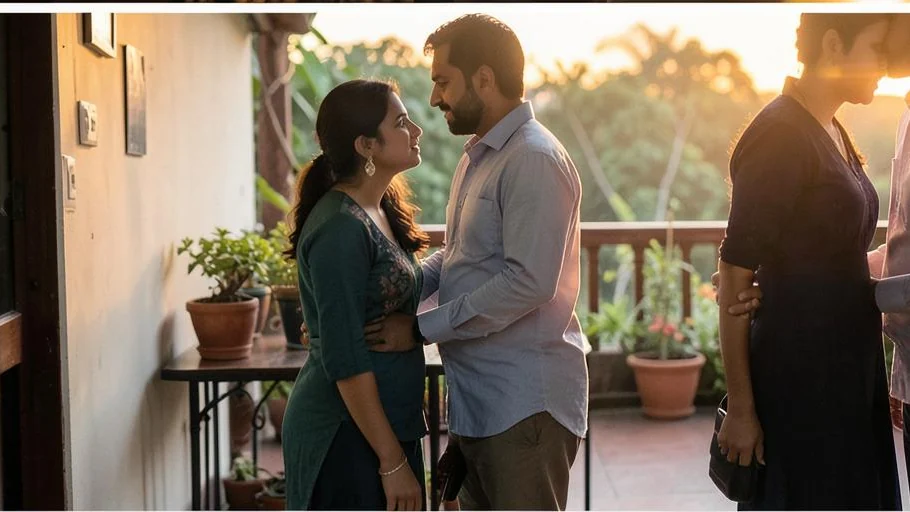
They tried. He travelled more often because his schedule allowed it, and she refused to treat that as a debt. When a delayed train ruined a theatre booking, they ate takeaway on her sister’s balcony instead. Her sister interrogated him about groundwater, then tactfully disappeared with both desserts.
Three months after checkout, Kavya brought him to the cooperative’s new storeroom to see the cargo scooter they had bought. Afterwards, walking towards the bus stop, she caught his hand. At the quiet corner beside a shuttered flower stall, he asked to kiss her. She said yes. Later, she sent him a photograph of the guesthouse lamp, repaired at last. “Still switches off at midnight,” she wrote. His answer arrived before her bus: “Good. See you Sunday.”